
In this seasonal guide, you see how Ecuador’s Amazon feels during rising rivers, flooded forests and drier months with more exposed trails. Water levels shape wildlife sightings, canoe access, comfort and the style of lodge or cruise you choose, from quiet creeks to broad open channels. If you want your trip to match your interests and energy, plan your Amazon dates with Tortuga Bay Travel Agency, compare high and low water itineraries, and choose the season, lodge or cruise style that fits your comfort level and sense of adventure.
Understanding Seasons in the Ecuadorian Amazon Rainforest
The Ecuadorian Amazon sits close to the equator, so it does not have the classic four seasons many travelers know. Instead of spring, summer, autumn and winter, the rainforest stays warm and humid all year, with daytime temperatures usually between the mid twenties and low thirties in Celsius. Trees keep their leaves, rain can fall in any month and the forest remains green and alive from January to December. What really changes is the balance between rainfall and river levels, and these shifts create the “seasons” that matter most for planning a trip.
Locals and guides usually talk about two main periods: higher water and lower water. During the months when rain is more frequent across the wider basin, rivers and lagoons rise, flooding large areas of forest and creating networks of creeks and channels that are perfect for canoe exploration. In the relatively drier part of the year, water levels drop, exposing more riverbanks, beaches and firm ground for walking. Animals and plants adjust to these cycles, moving closer to certain food sources or resting sites as water rises or falls.
Because of this, seasons in the Ecuadorian Amazon are best understood as water seasons rather than wet versus dry. You will still find rain, sun, clouds and clear nights at any time of year, often in the same day. The key difference is how you move through the landscape: more time gliding silently among flooded trees at high water, more time on forest trails and open shores at low water. Knowing this pattern is the first step to choosing when the rainforest will feel most in tune with your own way of exploring.
What the High Water Months Are Like in the Amazon (December to May)
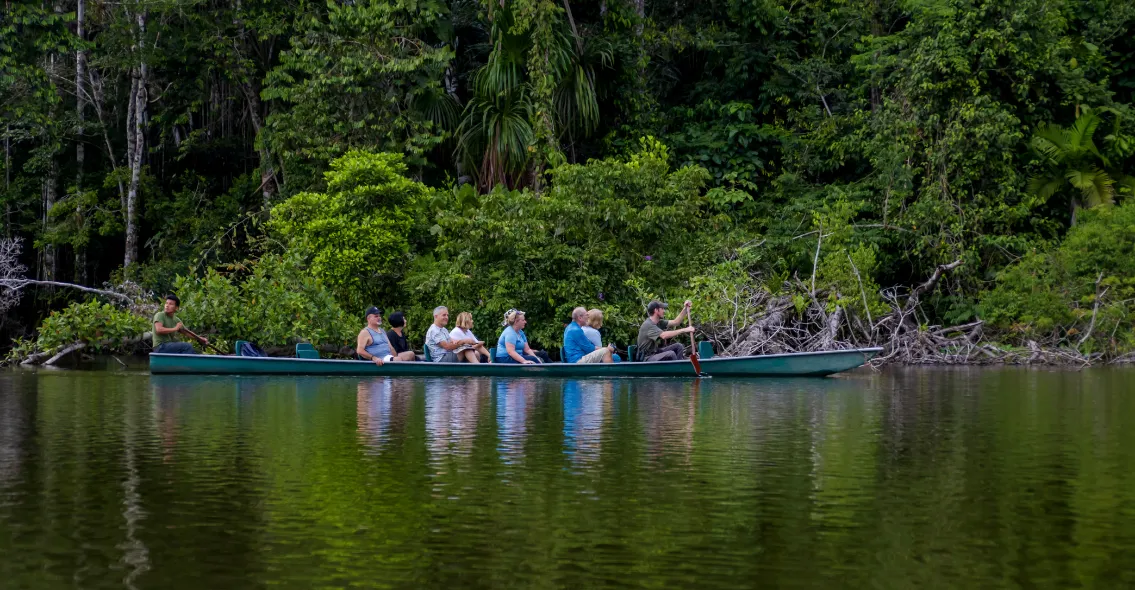
From roughly December to May, the Ecuadorian Amazon enters its high water period. Rainfall increases across the wider basin, and rivers, streams and blackwater creeks slowly rise. Forest that was dry a few months earlier becomes flooded, turning tree trunks into islands and opening silent channels between them. In many areas, canoes and small motorized boats can glide directly through the forest, reaching places that are inaccessible when water is low. This creates a strong feeling of immersion, with reflections of leaves and sky mirrored on the dark surface of the water.
Wildlife responds visibly to these conditions. Fish spread into the flooded forest to feed, followed by river dolphins and other aquatic life. Many birds take advantage of new feeding grounds along the edges of creeks and lagoons, so sightings from boats can be excellent. Monkeys, sloths and other arboreal animals remain in the canopy above, often seen from a slightly different angle because visitors are navigating at a higher water level. Mosquitoes can be more present in some areas, but careful lodge design and basic protection usually keep this manageable.
For visitors, high water season often feels cooler thanks to cloud cover and breezes over larger stretches of open water. Trails on firm ground may be fewer or shorter, but the variety of canoe outings usually increases. Photography gains from dramatic skies, flooded trunks and the sense of depth in the landscape. Overall, this period emphasizes navigation, reflections and the experience of a forest temporarily transformed into a vast, living wetland.
What the Low Water Months Are Like in the Amazon (June to November)
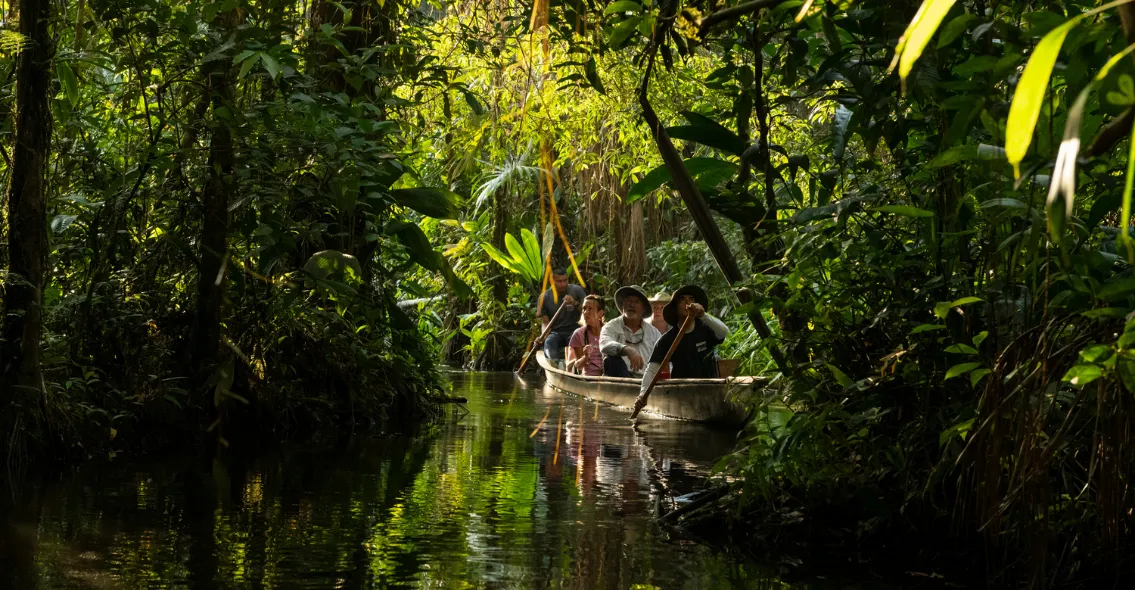
From roughly June to November, rivers in the Ecuadorian Amazon begin to drop, revealing more exposed banks, sandbars and firm forest trails. Channels that were wide and deep during high water become narrower, and some flooded areas slowly turn back into walkable ground. This shift changes how you move through the landscape. There is still plenty of time in canoes and small boats, but itineraries usually include more hikes on solid soil, where you can focus on tracks, insects, plants and forest structure in greater detail.
Wildlife behavior also adapts to lower water. Fish and aquatic animals concentrate more in the main rivers and remaining lagoons, which can make certain sightings easier along edges where animals come to drink or feed. Many birds are active around exposed branches, mudflats and shallows, offering good opportunities for observation and photography. With more open shoreline, you may see fresh footprints of tapirs, peccaries or big cats, even if the animals themselves stay hidden in the deeper forest. Night walks often feel especially rich, with frogs, spiders and other nocturnal creatures more visible on dry trails.
Weather during low water months tends to bring more clear skies and sunny hours, which can mean warmer days but also brighter light and stronger colors for photos. Afternoon showers are still common, yet downpours are often shorter. If you enjoy longer walks, time on riverbanks and the chance to read the forest floor like a storybook of tracks and signs, this season can be especially rewarding. To match this style of experience with the right lodge or cruise, plan your low water Amazon trip together with Tortuga Bay Travel Agency and choose dates that align with your interest in hiking, photography and active exploration.

Best Time to Visit the Amazon in Ecuador by Activities and Interests
The best time to visit the Amazon in Ecuador depends less on “good or bad months” and more on what you want to feel and do. If your main goal is to be surrounded by water, glide quietly among flooded trees and experience the forest as a vast wetland, the high water period is ideal. Canoe outings are longer and more varied, and the sense of entering deep channels and hidden creeks can feel very special for first time visitors who imagine the rainforest as a place of rivers and lagoons.
Travelers who love walking may prefer the lower water months, when more trails are accessible on firm ground. This season suits guests who enjoy longer hikes, looking for tracks and learning about plants, fungi and insects up close. Photographers who like strong sunlight, open views and clear reflections often appreciate these months, as shorelines and sandbars create interesting compositions and sunsets can be intense.
Birdwatchers usually find good opportunities year round, but high water can be especially productive along flooded edges, while low water brings activity to exposed branches and banks. Families with children or travelers seeking a balanced program of canoeing and walking might choose transitional periods, when water is neither at its highest nor lowest. In practice, every month offers wildlife, forest sounds and river journeys; the key is deciding whether you feel more attracted to the image of paddling through submerged forest, exploring longer trails, or combining both experiences in a single trip.
How to Choose Your Ideal Dates and Plan an Amazon Trip That Fits You
Choosing the right dates for an Amazon trip in Ecuador starts with being honest about your comfort level and travel style. If you prefer cooler sensations, cloudier skies and the idea of moving mostly by canoe, months within the high water period may feel more natural. If you enjoy sunshine, walking and do not mind warmer temperatures, the lower water season can be a better match. Thinking about how you like to spend a typical vacation day helps: more time sitting quietly on boats, or more time on your feet exploring trails.
It is also useful to consider how active you want the itinerary to be. Travelers who like early starts, long outings and full schedules might choose weeks when lodges or cruises offer a strong mix of day and night excursions. Those who prefer slower rhythms can look for programs that include breaks at midday and more time to rest in hammocks, watch the river and listen to the forest. Trip length matters too. A short three night stay benefits from clear priorities, while a week or more allows you to combine different areas or styles, such as a lodge deep inside the forest followed by a quieter night in a gateway town.
Personal interests should guide the final decision. Birdwatching, photography, family travel, celebrating a special occasion or focusing on wellness each suggest slightly different timing and lodge choices. Reading sample itineraries, checking average water levels for your preferred months and noting school holidays or work breaks will gradually reveal a window that suits you. When season, activities, comfort level and trip length align, the rainforest feels less like a challenge to endure and more like an environment that welcomes your way of traveling.
Conclusion
There is no single perfect month to visit the Amazon in Ecuador; each season offers a different balance of river levels, walking trails and wildlife encounters in the forest. Think about how you like to explore, then choose dates that fit your pace, comfort and interests. Plan your journey with Tortuga Bay Travel Agency and let the season work in your favor from day one.